
Running a gastroenterology practice means juggling patient care, complicated methodologies, and a mountain of paperwork, among colonoscopies, endoscopies, and severe disease management. GI practices deal with some of the most complex billing codes in medicine. One small coding mistake can mean a denied claim, delayed payment, or lost revenue.
This is because many gastroenterology practices across the United States of America now rely on certain medical billing services. In this guide, you will understand what gastroenterology medical billing includes, why it’s uniquely challenging, how outstanding works, what to look for in a billing partner, and how to prevent pricey mistakes.
Gastroenterology medical billing is the method of translating GI-related medical services into billing codes, submitting claims to insurance agencies, and collecting payment for services rendered. This involves everything from daily routine consultations to complex surgical methods. GI Billing covers a broad range of services, such as:
Every service needs precise coding by using CPT (Current Procedural Terminology), ICD-10 (Diagnosis codes), and HCPCS codes.

GI Billing is harder than many other specialties for some key reasons:
A single colonoscopy visit may involve a screening, a biopsy, and polyp removal. Each of these requires separate, precise codes. Billing them incorrectly can lead to claim denials or even compliance issues.
This is one of the biggest pain points in GI billing. Routine screening colonoscopy is generally covered at 100% under preventive care rules. But if the physician finds and eliminates a polyp using that same method, the physician may switch to a diagnostic process, changing the patient’s cost-sharing responsibility. Many individuals do not know this shift, which leads to billing disputes and complaints.
GI billing relies heavily on modifiers like:
Modifier | Meaning |
33 | Preventive service |
PT | Screening converted to diagnostic (Medicare) |
59 | Distinct procedural service |
22 | Increased procedural complexity |
Using the wrong modifier – or forgetting completely can cause a claim to be denied or underpaid.
CPT and ICD-10 codes related to gastroenterology are updated on a daily basis. Practices that do not stay current challenge submitting outdated codes, which insurers reject automatically.
Specialized GI billing companies generally offer:
Certified coders assign accurate CPT, ICD-10, and HCPCS codes based on physician documentation.
Billing teams submit claims electronically and record their status until payment is received.
When claims are denied, billing experts investigate the reason, correct errors, and resubmit or appeal.
Before procedures happen, billing services ensure patient coverage and secure any necessary pre-approvals.
Clear, accurate patient statements decrease confusion and enhance collection rates.
Practices receive daily reports on revenue, denial trends, and overall financial health.
Tracking billing performance helps identify issues earlier and boost collections.
Clean Claim Rate: | Percentage of claims accepted on the first submission. |
Days in A/R: | Average time it takes to collect payments. |
Collection Rate: | Percentage of expected revenue successfully collected. |
Denial Rate: | Percentage of claims rejected by insurance companies. |
First Pass Resolution Rate: | Percentage of claims paid without corrections or appeals. |
More gastroenterology practices are choosing to outsource billing rather than manage it in-house. Here’s why:
Factor | In-House Billing | Outsourced Billing |
Staffing costs | High (salaries, benefits, training) | Lower (pay per service or percentage) |
Coding expertise | Varies by staff experience | Certified GI-specific coders |
Claim denial rates | Often higher | Typically lower |
Scalability | Limited | Flexible |
Focus on patient care | Divided attention | Improved |
Technology costs | Practice must invest | Often included in service |
Neither option is automatically better for each practice. Smaller practices with tight budgets might benefit from outsourcing, while larger practices with strong internal systems might manage well in-house.
Not all billing agencies understand gastroenterology’s unique coding requirements. When evaluating a billing partner, consider these components.

Ask if they have direct experience billing for gastroenterology, not just general medical billing.
Look for coders certified in CPC (Certified Professional Coder) or similar credentials with GI-specific training.
Ask how they manage denied claims. A stronger provider must have a clear appeals process and track the reasons to avoid repeat issues.
The billing services must integrate smoothly with your existing Electronic Health Record (EHR) system.
Know exactly how you will be charged, such as a flat fee, a percentage of collections, or per-claim pricing.
Ensure they follow HIPAA regulations and stay updated on CMS (Centers for Medicare & Medicaid Services) instructions.
You must receive daily, easy-to-understand reports on your practice’s financial performance.
Prevent these frequent mistakes:
The billing landscape continues to evolve. Here are trends shaping the industry today:
Multiple billing agencies now use AI tools to catch coding errors before claims are submitted, potentially decreasing denial rates.
More GI practices are shifting toward value-based repayment, which ties payment to patient outcomes rather than just procedure volume.
Post-pandemic, GI practices continue offering telehealth consultations, needing billing teams to understand telehealth-specific codes and rules.
Practices are investing in clearer billing statements and payment plans to decrease patient confusion and boost collections.
Whether you outsource or handle billing internally, these best practices help:

Here are some billing regulations that may support practices to prevent penalties and boost repayments:
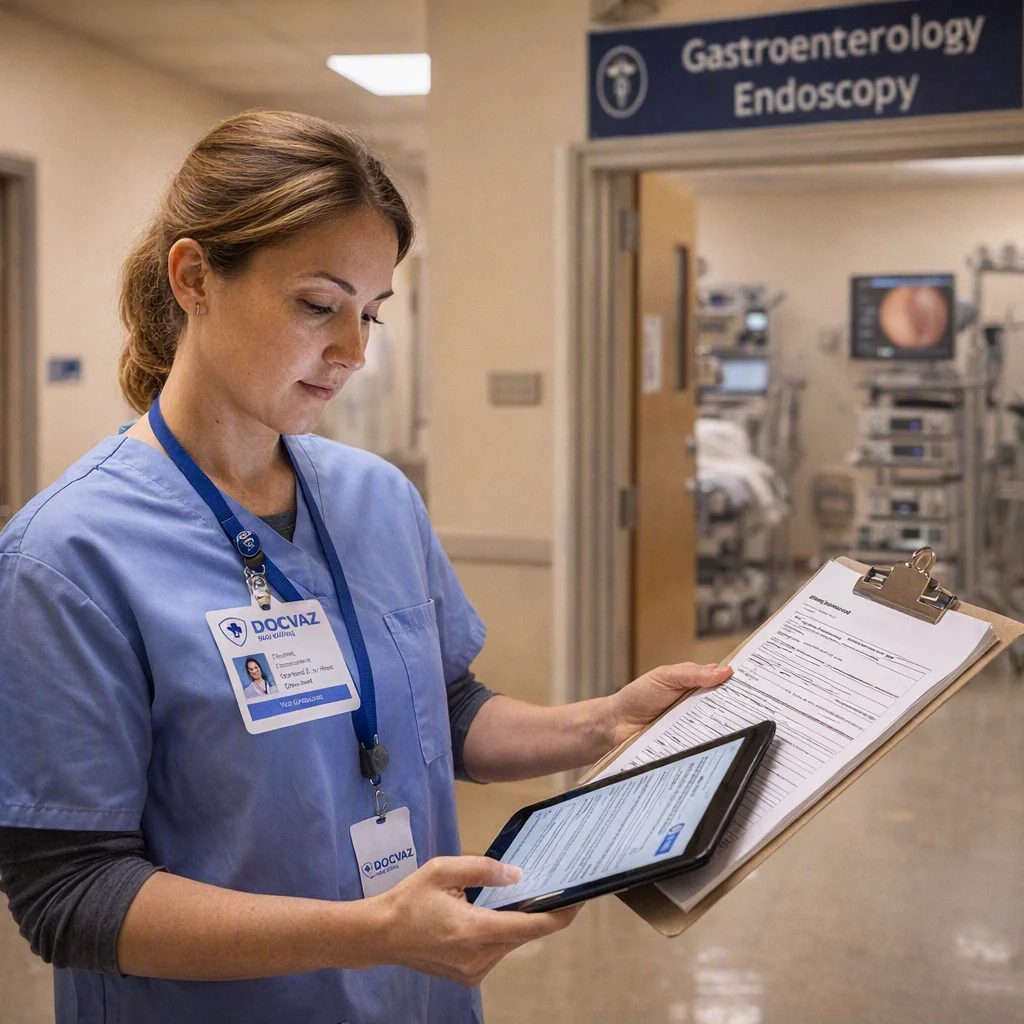
Knowing real-life billing situations can help avoid costly coding errors.
A patient visits the physician for a routine screening colonoscopy. During the procedure, the doctor discovers and removes a polyp. Although the visit starts as preventive imaging, removing the polyp changes how the visit is billed. For medicare patients, the claim generally needs Modifier PT to show that a screening colonoscopy was converted into a diagnostic or therapeutic procedure.
If the correct modifier is not applied, the claim might be denied, underpaid, or result in incorrect patient code sharing. Accurate documentation and coding help confirm compliance and decrease repayment delays.
A patient visits the physician for a routine screening colonoscopy. During the procedure, the doctor discovers and removes a polyp. Although the visit starts as preventive imaging, removing the polyp changes how the visit is billed. For medicare patients, the claim generally needs Modifier PT to show that a screening colonoscopy was converted into a diagnostic or therapeutic procedure.
If the correct modifier is not applied, the claim might be denied, underpaid, or result in incorrect patient code sharing. Accurate documentation and coding help confirm compliance and decrease repayment delays.
Boost your practice’s revenue with expert Gastroenterology Medical Billing Services in the USA. Our experts manage each step of the billing process with accuracy and efficiency, supporting you in minimizing denials, boosting collections, and maintaining compliance with industry regulations. Get in touch with DocVaz Medical Billing and explore how our addressed billing solutions can help your gastroenterology practice thrive.
If the correct modifier is not applied, the claim might be denied, underpaid, or result in incorrect patient code sharing. Accurate documentation and coding help confirm compliance and decrease repayment delays.
Prices vary, but many billing agencies charge between 4% and 9% of collected revenue, based on practice size and service scope.
Clean claims are generally paid within 14 to 30 days, though this is based on the insurance payer and claim accuracy.
Most specialized GI billing services manage prior authorizations for procedures that need them, such as capsule endoscopy or a specific biologic process for IBD.
Look for coders with CPC (Certified Professional Coder) credentials, ideally with additional specialty training in gastroenterology coding.
Precise documentation, correct modifier use, insurance verification, and daily staff training are the most effective ways to decrease denials.
Yes, smaller practices often notice the biggest benefit since they may lack devoted billing staff or coding experts in-house.